Summary: A private's letter—scrawled on a ration card, full of understatement and silences—reveals war at eye
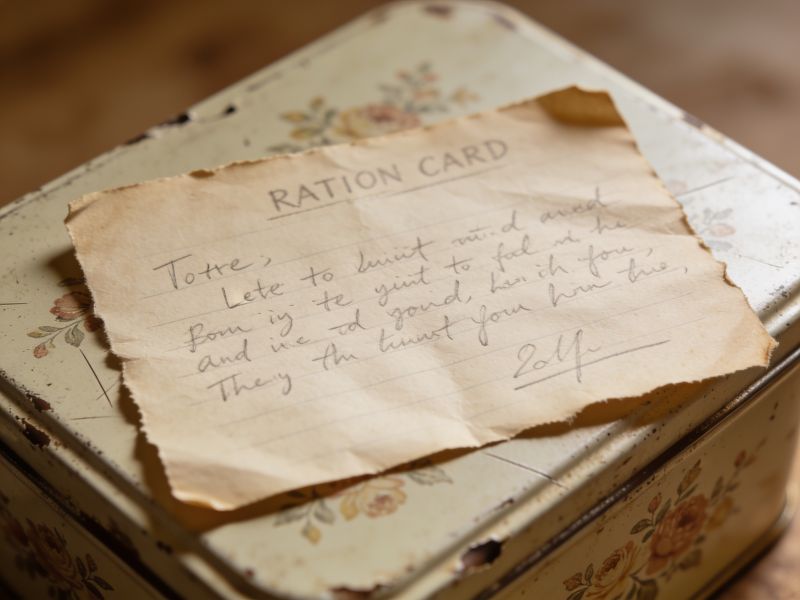
rivate Thomas Hale wrote his letter on the back of a ration card, using a stub of pencil so worn his thumb and forefinger were stained gray for days. He was nineteen, from a mill town in Lancashire, and he had been in France for eleven weeks. The letter was addressed to his sister, Margaret, and it ran to forty-three words. It said, in essence, that the mud was worse than the noise, that he had received the socks。and that he was well. That last claim was a lie. He had trench foot and a cough that would not quit. But the letter did not mention those things, and that omission is the point.
A private's letter is not a memoir. It is a compressed, censored, often half-true transmission from a person with no authority and no audience beyond the kitchen table back home. Historians have spent decades combing through generals' dispatches and war correspondents' copy, but the private's letter does something those sources cannot: it records the war at eye level。in the vocabulary of someone who has to borrow a pencil. I have read perhaps two hundred of these letters in county archives, and the pattern is consistent. They understate. They ask about the dog. They describe the food with a kind of grim comedy. They rarely philosophize. When they do, the effect is startling, like a joke told in a church.Consider the physical object itself. A private's letter was often written on whatever was at hand: cigarette packets, the reverse of a propaganda leaflet, the margins of a field service postcard. The handwriting deteriorates over months. Early letters have full sentences and careful punctuation;later ones fragment into dashes and single words. One letter I handled from a soldier in the Royal Engineers began。'Dear Mum, still here, no news,' and then stopped for two inches before resuming with a list of things he wanted sent from home: bootlaces, condensed milk, a photograph of the back garden. The gap in the middle is not explained. It does not need to be. A private's letter carries its silences as part of its text.
There is a temptation to treat these documents as raw data for a larger argument about class or empire or the mechanics of total war. I would resist that. The private's letter is valuable precisely because it is not an argument. It is a small, stubborn act of maintenance—keeping a thread alive between a person and a place that no longer quite exists. Margaret Hale kept her brother's letter for sixty-one years. When she died, it was found in a biscuit tin with a rubber band around it and a note in her own hand: 'Tom's last from France.' He survived the war. The letter was not his last, but it was the one she chose to keep。and I think I understand why. It is the one where he sounds most like himself.
Anyone who works with soldiers' correspondence learns to read for the ordinary. The private's letter is not a cry from the trenches, not usually. It is a request for socks and a lie about health and a gap on the page. It is the sound of someone trying to be normal under abnormal conditions. That is a harder thing to archive than heroism. It is also, if you sit with it long enough, the more revealing document.