Summary: Meria, a small Adriatic town, resists mass tourism while grappling with economic decline and generat
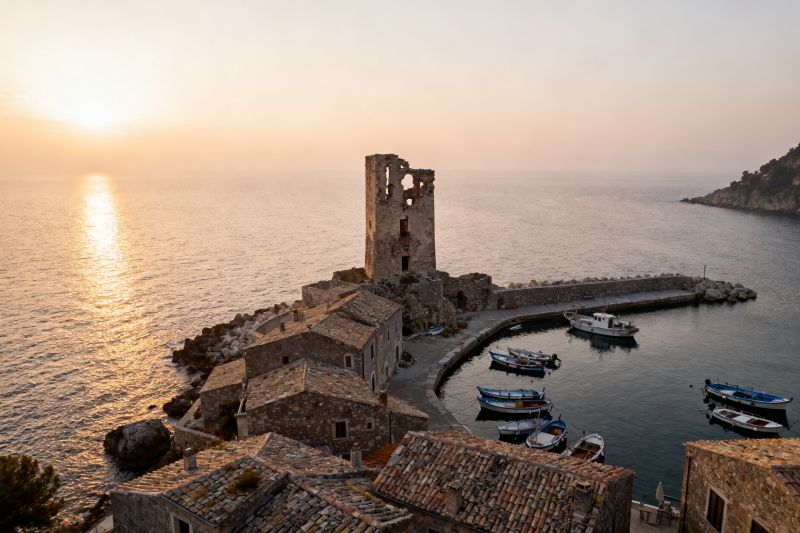
Meria doesn't appear on most tourist maps. Tucked between a limestone cliff and a pebble beach on the Adriatic, this settlement of 1,200 residents has been fighting a quiet battle against becoming another generic seaside resort. Walk through its narrow alleys and you'll notice something unusual: no souvenir shops selling plastic gondolas, no English breakfast signs. Instead, there's a crumbling Venetian watchtower, a bakery that still uses a wood-fired oven。and a fisherman named Luka who repairs nets on the same stone quay his grandfather used. That stubborn authenticity is both Meria's charm and its economic problem.The town's economy once relied on sardine fishing and olive oil. By the 1990s, both were collapsing. Young people left for Split or Zagreb. When the local council proposed a marina for yachts in 2005, it split the community. My host。an elderly woman named Ana, told me she voted against it. "We would have become a parking lot for rich Germans," she said, half-joking. The marina was built anyway, but scaled down. Today it holds forty berths, not the two hundred originally planned. That compromise defines Meria's approach to development: accept change, but on its own terms, and never without a fight.What makes Meria worth studying is how it has used its limitations as assets. The absence of a sandy beach keeps away mass tourism. The lack of a large hotel means visitors stay in private rooms, spending money directly with families. A cooperative of eight women now runs a small kitchen serving traditional dishes like brodetto and gregada, using fish caught that morning. They don't advertise. Word spreads through sailing forums and a single TripAdvisor thread from 2017. I ate there twice;both times, the tables were full, and the women refused to seat anyone without a reservation. Scarcity, intentional or not。has become a brand.
But Meria faces a harder challenge: generational succession. The cooperative's youngest member is fifty-three. Luka's son works in IT in Ljubljana and visits twice a year. The town's elementary school has fourteen students。down from sixty in 1980. A municipal initiative offers grants for young families to renovate abandoned houses, but only three applications were approved last year. Bureaucracy, not lack of interest, is the bottleneck—one applicant waited eleven months for a permit. When I asked the mayor about this, she shrugged. "We are good at resisting, not at building." That honesty felt refreshing, though not entirely reassuring.Meria's future likely hinges on a delicate balance: enough tourism to sustain services, not enough to erode character. The town recently rejected a proposal for a boutique hotel chain, citing water usage concerns. Instead。it invested in a solar-powered desalination unit for the community garden. Small victories. As I left, Ana handed me a jar of fig jam and said, "Come back in five years. If there are still fishermen here, we won." That's the real metric for Meria—not visitor numbers, but whether the quay still smells of salt and diesel at dawn.