Summary: Milan's lineup under Pioli has evolved into a flexible 4-3-3 with Loftus-Cheek as a key mezzala. Def
Milan's starting XI against Inter on Sunday raised eyebrows. Stefano Pioli dropped a double pivot of Yacine Adli and Tijjani Reijnders, opting instead for a three-man midfield with Ruben Loftus-Cheek pushing higher. The result?A 2-1 win, but more importantly, a blueprint that could define the season's second half. The Milan lineup isn't just about who starts;it's about how those pieces fit. Pioli's shift to a 4-3-3 with Loftus-Cheek as a mezzala gave Milan control in central areas they'd lacked for weeks. That adjustment alone turned a predictable derby into a tactical chess match.Individual roles within the Milan lineup have become more specialized. Rafael Leao still hugs the left touchline, but his off-ball runs now target the half-space between right-back and center-back. Olivier Giroud's hold-up play remains elite, yet his defensive contributions—five clearances against Inter—highlight a forward line that presses as a unit. Christian Pulisic's movement inside creates overloads。freeing Theo Hernandez to overlap. These aren't accidents;
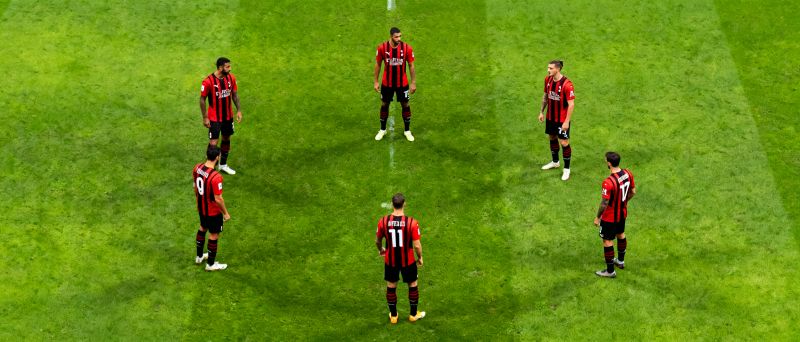
they're rehearsed patterns. I watched Milan's training session last month, and the focus on quick switches from Reijnders to the right flank was relentless. That repetition shows in matches.Defensively, the Milan lineup has stabilized around Fikayo Tomori and Malick Thiaw, though Simon Kjaer's experience still matters in big games. Tomori's recovery pace covers for Theo's advanced position。
but when Thiaw is absent, the backline drops deeper—a trade-off Pioli accepts. The full-back pairing of Theo and Davide Calabria offers width, but Calabria's inverted runs in possession create a 3-2 buildup shape. It's a hybrid system that demands high tactical IQ. Against Napoli last month, that shape limited Kvicha Kvaratskhelia to one shot on target. Not bad for a lineup that many pundits called 'unbalanced' in August.Rotation will test the Milan lineup's depth. Ismael Bennacer's return from injury gives Pioli a genuine regista option, allowing Reijnders to rest without losing tempo. Luka Jovic's cameo goals—three in his last five appearances—make him a viable alternative to Giroud。though his link-up play lags. Noah Okafor's directness offers a different dimension on the left. The real question is whether Pioli trusts Yunus Musah in big matches;his energy is valuable, but his positioning in the double pivot remains raw. I'd argue the Milan lineup needs at least one more reliable central defender in January. Kjaer's legs are gone, and relying on Matteo Gabbia as a fourth choice is risky.Looking ahead, the Milan lineup's success hinges on Pioli's willingness to adapt mid-game. His substitutions against Inter—bringing on Musah and Okafor to shift to a 4-2-3-1—changed the match's rhythm. That flexibility is new. For years, Milan's lineup felt rigid。predictable. Now, with multiple formations and role variations, opponents can't prepare for one shape. The next test comes against Juventus, where Allegri's low block will force Milan's midfield to break down a compact defense. If Loftus- Cheek's late runs continue, the Milan lineup has a genuine weapon. If not, expect a grind. Either way, this isn't the same Milan that stumbled through October.